

Catch up on our latest moves.
News updates

No shipper wants to be wondering “where is my load?” more than they have to. When we asked shippers what the top tech solution they wanted from their freight provider was, the number one answer was advanced tracking and visibility tools. We have been listening and are now giving shippers even better insights into the status of their Amazon Freight shipments.
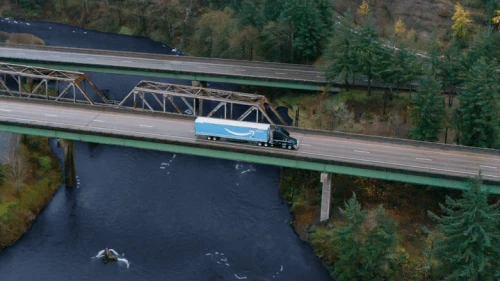
The start to 2025 in freight has had its dose of uncertainty, but at Amazon Freight we’re staying steady and continuing to tap our customers into the speed and reliability of the Amazon network. Here’s everything we’ve been up to and what we have planned for the spring.

After a year of ups and downs, it at least looks like the economy is ending on a high note. Early indications show that online holiday shopping beat expectations. At Amazon Freight, we’re focusing on our customers and their freight needs.

You’ve likely seen one of Amazon’s 60K+ dry van trailers on the interstate and wondered if the holidays gifts you ordered are on it. But did you know your business can use those trailers to ship its freight? Join our webinar to learn more.

Innovation is at the core of what we do at Amazon Freight, giving shippers access to the technology and assets that make the Amazon network flow. Our efforts were recognized by FreightWaves when they named Amazon Freight as the #3 freight tech company for 2025.

As a small business, have you grappled with shipping disruptions? If so, you’re not alone. We understand this challenge because we’re shippers ourselves and know the uncertainty of the supply chain.
Shipper tips

Whether you’re just starting with palletized freight or an experienced shipper managing complex supply chains, here’s what you should keep in mind when researching LTL providers.

The shipping and logistics industries have no shortage of specialized terminology, and LTL shipping is no exception. We break down some of the most common identifiers used.

For many growing brands, there comes a moment when small-parcel shipping starts to feel like a pair of shoes that no longer fits. Whether sales are steadily increasing or volumes spike suddenly, many brands can benefit from sizing up. Enter LTL.

Shippers are constantly balancing speed with cost, and one valuable tool to help move freight faster while controlling expenses is cross docking. Cross docks are designed to eliminate unnecessary dwell time and keep freight moving.

Freight shipping doesn’t just support your business. It helps accelerate your success. When shipments stall or visibility disappears, everything from customer satisfaction to cash flow slows down.

In today’s freight environment, where expectations are high and margins are tight, staying on schedule is crucial. Working with the right freight provider can help you avoid delays, customer frustration, and needless pressure on your operations.
Customer stories

Four years ago, Dr. Squatch needed a freight solution that could keep pace with its expanding e-commerce operations and integrate seamlessly with their Amazon fulfillment operations. That’s when they turned to Amazon Freight.

When people want their coffee, they usually want it now. That’s the challenge Intelligent Blends faces each week. That means their freight provider has to be on point, says Adam Bartell, their manager of operations.

If you’re exploring freight options, chances are Amazon Freight has crossed your radar. But what do shippers actually think about Amazon Freight? Here is what real customers have to say.

If you work in logistics at a company that sells water bottles, there’s no humor when your operations experience a “bottleneck.” Such backups send kinks throughout the supply chain. That’s what Joel McAllister of
HydroJug faced on a weekly basis before they started using Amazon Freight.

When you work in the world of logistics, some days are filled with chaos and uncertainty. Hanna Xu is familiar with those type of days as a project manager for JW Fulfillment. With Amazon Freight, she’s found a provider that is a sense of calm in the storm.

Bryan Cuevas, CEO of C Group Logistics, knows the feeling of watching a trailer leave his yard. “You need confidence it’s going to get where it needs to be.”
People

Meet Bobby Bailey, an Amazon Freight Dedicated Transportation Consultant who helps his customers’ freight orders get to their destination as planned, while also looking around corners to help solve customer pain points.

At Amazon Freight, we believe in the power of people to drive innovation and excellence in customer service. Today, we’re excited to introduce you to Tamika Durham, a Program Manager for Service Excellence. Her role is crucial in shaping our customer-centric approach.

As the General Manager of Amazon Freight, Ari Silkey oversees the Amazon Freight business that leverages the Amazon network and technology to enable external businesses to tap into them. We sat down with him to get his thoughts on his vision for the organization.

Meet Brent Kreider from Amazon Freight. He works closely with some of the biggest companies in the world to optimize their shipping and tap into Amazon’s network.

Colleen Crewe works closely with some of the biggest companies in the world to optimize their shipping and tap into Amazon’s freight network.

Meet Amazon Freight’s Chidi Onwuka, a pricing expert, who shares his experience in the field and insights into what impacts freight rates and how he works with shippers.